(1)
The performance level of a building after construction shall not be less than the performance level of the building prior to construction.
(2)
For the purposes of Sentence (1), reduction of performance level shall be determined in accordance with Articles 11.4.2.1., 11.4.2.3. and 11.4.2.5.
(3)
Where the proposed construction would reduce the performance level of an existing building, compensating construction shall be required in conformance with Articles 11.4.3.1., 11.4.3.2., 11.4.3.4. and 11.4.3.6.
(4)
Section 11.5. applies in respect of the requirements of Sentences 11.4.3.4.(1), (3) and (4).
Table 9.20.17.4.-A
Maximum Allowable Clear Spans for Lintels in Flat Loadbearing Insulating Concrete Form (ICF) Walls
Forming Part of Sentences 9.3.2.8.(1) and 9.20.17.4.(3)
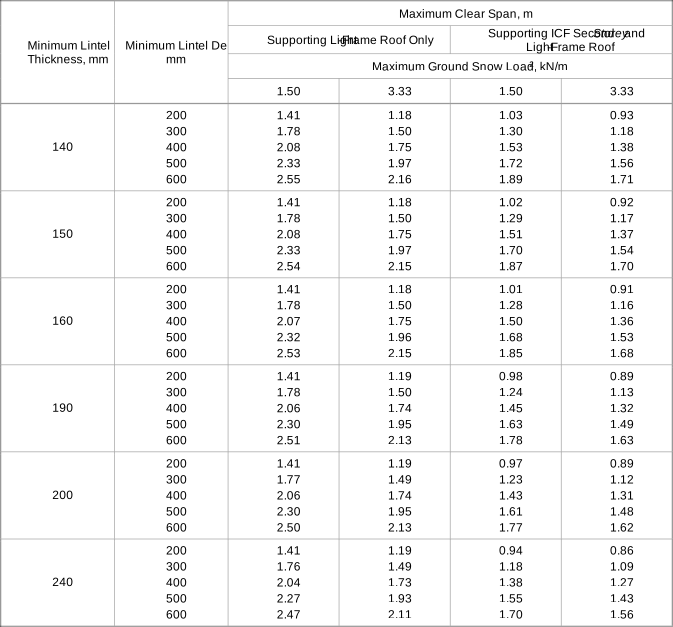
Notes to Table 9.20.17.4.-A:
(1) Deflection criteria is L/240, where “L” is the clear span of the lintel.
(2) Linear interpolation is permitted between ground snow loads and between lintel depths.
(3) 10M stirrups are required at a maximum d/2 spacing for spans greater than 1 200 mm, where “d” is the distance from the top of the lintel to the level of the bottom reinforcing bar in the lintel.
Table 9.20.17.4.-B
Maximum Allowable Clear Spans for Lintels in Flat Loadbearing Insulating Concrete Form (ICF) Walls
Forming Part of Sentences 9.3.2.8.(1) and 9.20.17.4.(3)
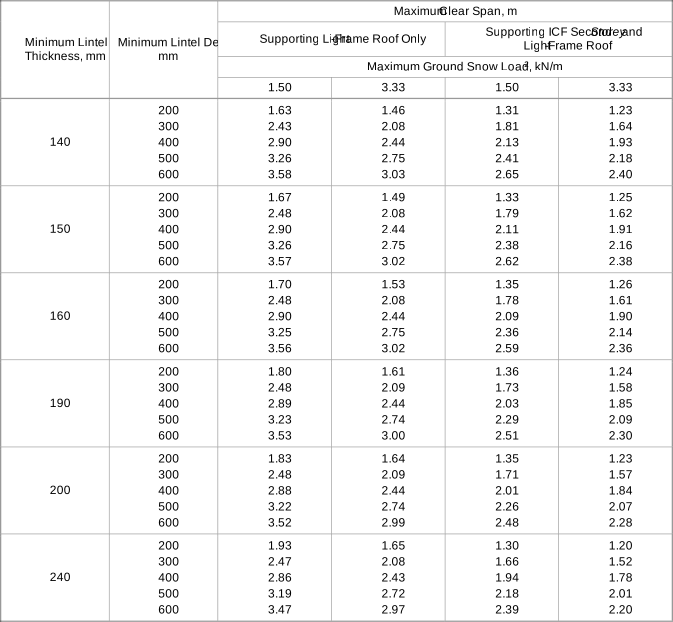
Notes to Table 9.20.17.4.-B:
(1) Deflection criteria is L/240, where “L” is the clear span of the lintel.
(2) Linear interpolation is permitted between ground snow loads and between lintel depths.
(3) 10M stirrups are required at a maximum d/2 spacing for spans greater than 1 200 mm, where “d” is the distance from the top of the lintel to the level of the bottom reinforcing bar in the lintel.
Table 9.20.17.4.-C
Maximum Allowable Clear Spans for Lintels in Flat Loadbearing Insulating Concrete Form (ICF) Walls
Forming Part of Sentences 9.3.2.8.(1) and 9.20.17.4.(3)
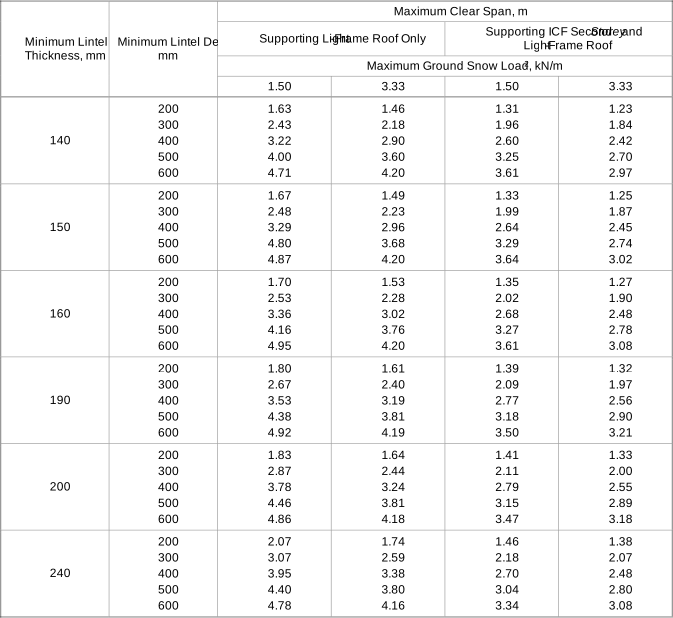
Notes to Table 9.20.17.4.-C:
(1) Deflection criteria is L/240, where “L” is the clear span of the lintel.
(2) Linear interpolation is permitted between ground snow loads and between lintel depths.
(3) 10M stirrups are required at a maximum d/2 spacing for spans greater than 1 200 mm, where “d” is the distance from the top of the lintel to the level of the bottom reinforcing bar in the lintel.
Table 9.23.4.2.-A
Maximum Spans for Floor Joists – General Cases
Forming Part of Sentences 9.23.2.8.(1), 9.23.4.2.(1) and (2), 9.23.4.4.(1) and 9.23.9.4.(1) to (3)
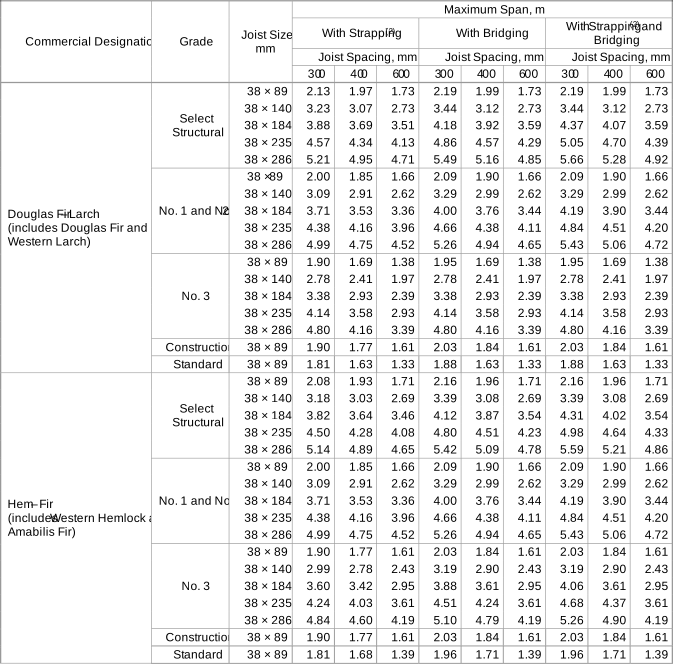
Table 9.23.4.2.-A
Maximum Spans for Floor Joists – General Cases
Forming Part of Sentences 9.23.2.8.(1), 9.23.4.2.(1) and (2), 9.23.4.4.(1) and 9.23.9.4.(1) to (3)
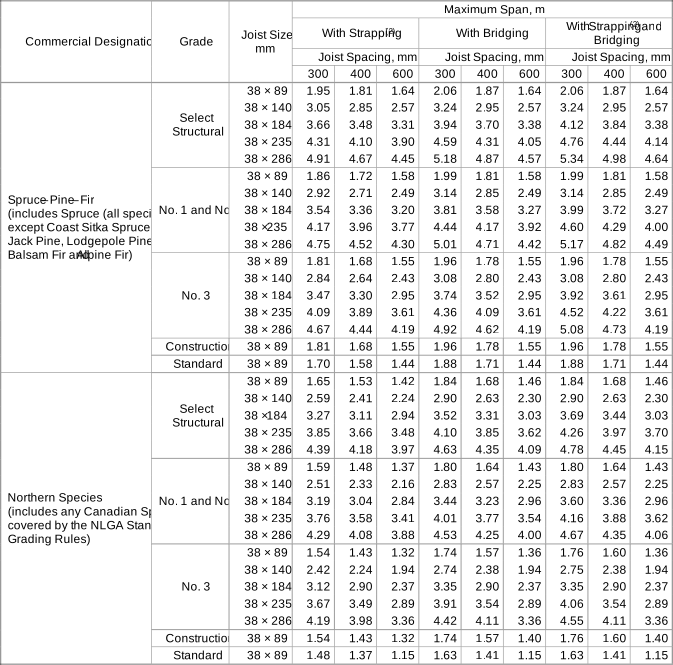
Notes to Table 9.23.4.2.-A:
(1) Spans apply only where the floors serve residential areas as described in Table 4.1.5.3., or the uniformly distributed live load on the floor does not exceed that specified for residential areas as described in Table 4.1.5.3.
(2) See Sentence 9.23.9.4.(5) for alternatives to strapping.
Table 9.23.4.2.-B
Maximum Spans for Floor Joists – Special Cases
Forming Part of Sentences 9.23.2.8.(1), 9.23.4.2.(1) and (2), 9.23.4.4.(2) and 9.23.9.4.(4) and (6)
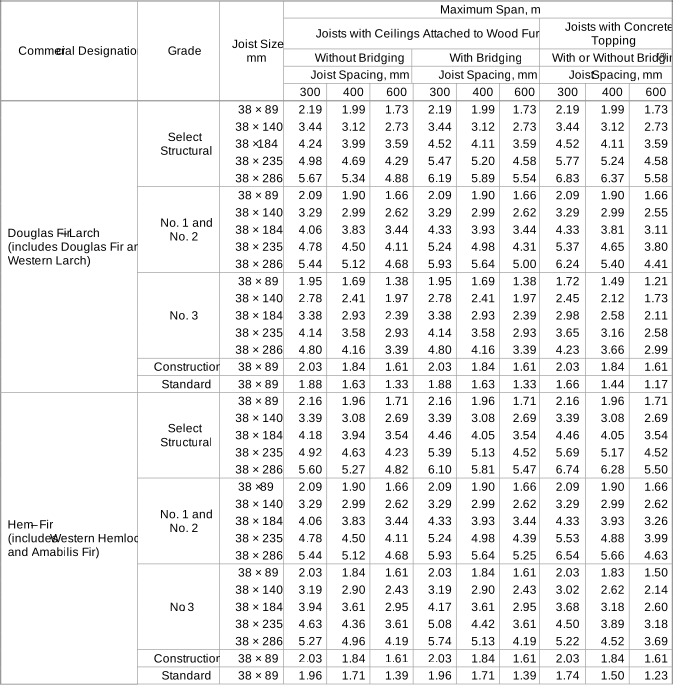
Table 9.23.4.2.-B
Maximum Spans for Floor Joists – Special Cases
Forming Part of Sentences 9.23.2.8.(1), 9.23.4.2.(1) and (2), 9.23.4.4.(2) and 9.23.9.4.(4) and (6)
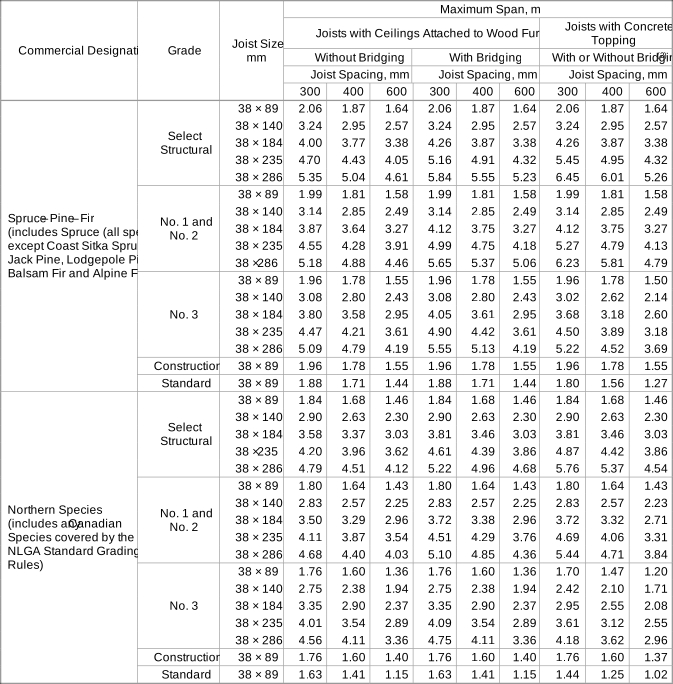
Notes to Table 9.23.4.2.-B:
(1) Spans apply only where the floors serve residential areas as described in Table 4.1.5.3., or the uniformly distributed live load on the floor does not exceed that specified for residential areas as described in Table 4.1.5.3.
(2) No bridging is assumed for spans for floor joists with concrete topping.
Table 9.23.4.2.-C
Maximum Spans for Ceiling Joists – Attic Not Accessible by a Stairway
Forming Part of Sentences 9.23.2.8.(1), 9.23.4.2.(1) and 9.23.14.10.(2)
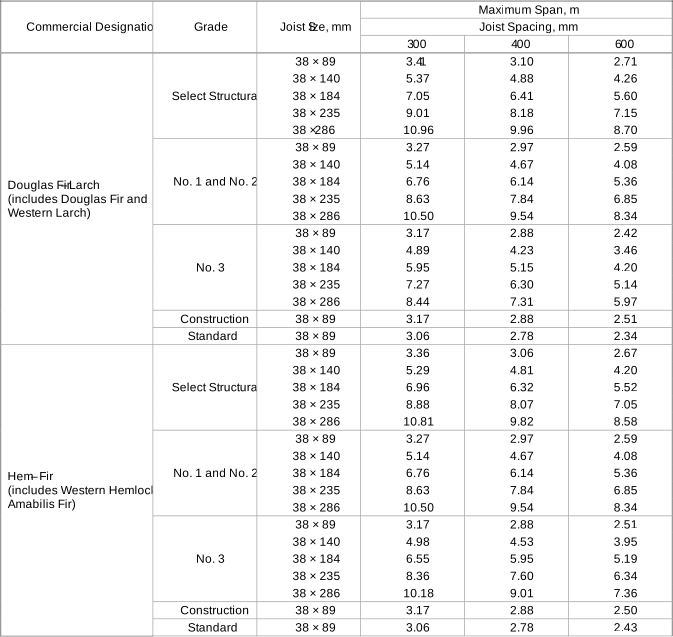
Table 9.23.4.2.-C
Maximum Spans for Ceiling Joists – Attic Not Accessible by a Stairway
Forming Part of Sentences 9.23.2.8.(1), 9.23.4.2.(1) and 9.23.14.10.(2)
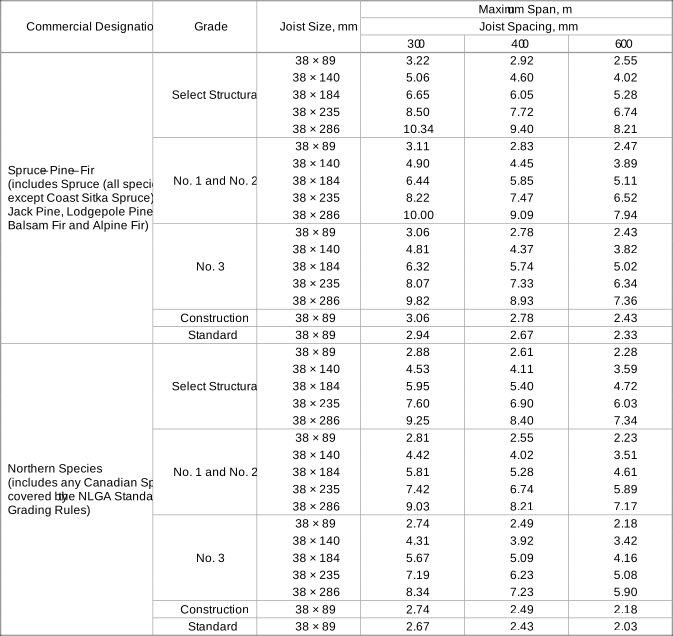
Table 9.23.4.2.-D
Maximum Spans for Roof Joists – Specified Roof Snow Loads 1.0 to 2.0 kPa
Forming Part of Sentences 9.23.2.8.(1), 9.23.4.2.(1), 9.23.4.5.(1) and 9.23.14.10.(2)
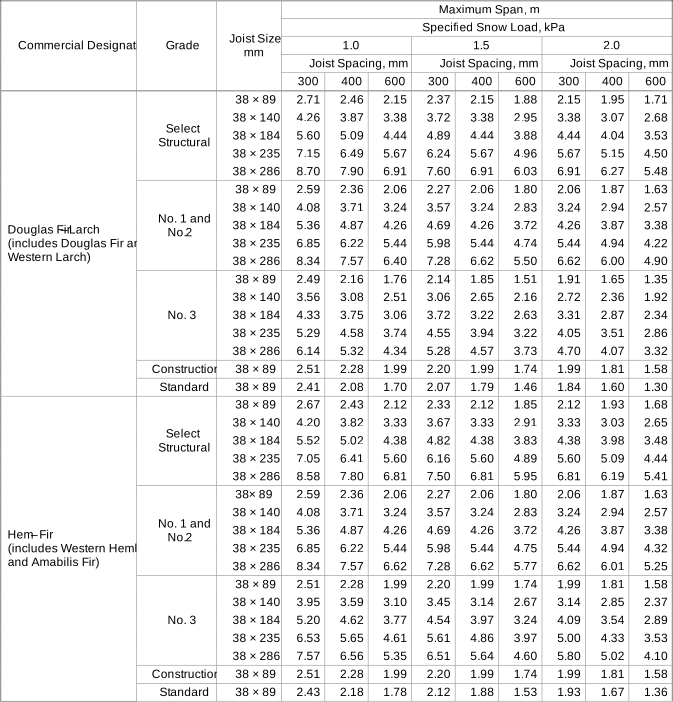
Table 9.23.4.2.-D
Maximum Spans for Roof Joists – Specified Roof Snow Loads 1.0 to 2.0 kPa
Forming Part of Sentences 9.23.2.8.(1), 9.23.4.2.(1), 9.23.4.5.(1) and 9.23.14.10.(2)
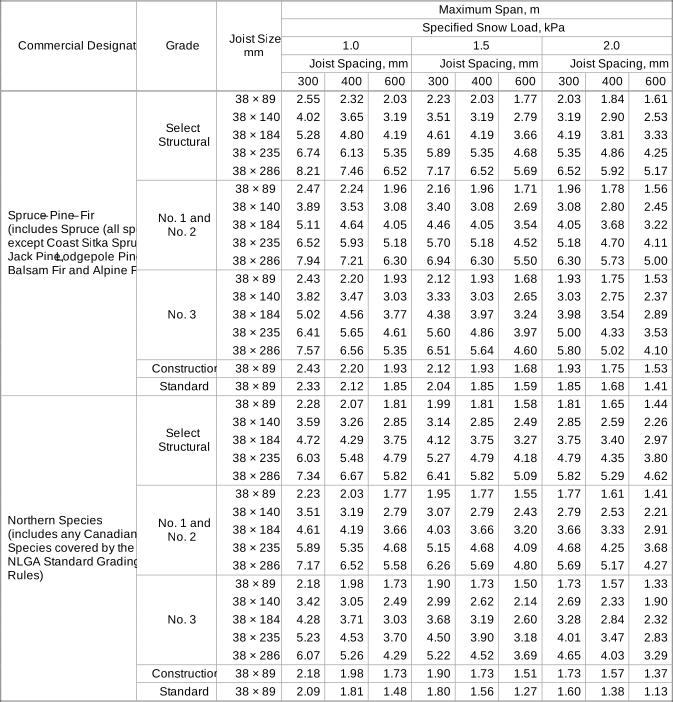
Table 9.23.4.2.-E
Maximum Spans for Roof Joists – Specified Roof Snow Loads 2.5 and 3.0 kPa
Forming Part of Sentences 9.23.2.8.(1), 9.23.4.2.(1), 9.23.4.5.(1) and 9.23.14.10.(2)
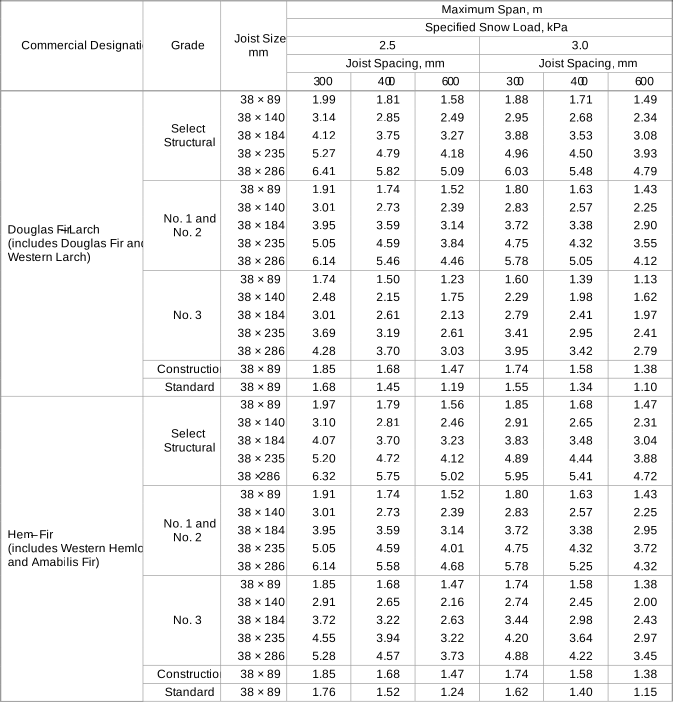
Table 9.23.4.2.-E
Maximum Spans for Roof Joists – Specified Roof Snow Loads 2.5 and 3.0 kPa
Forming Part of Sentences 9.23.2.8.(1), 9.23.4.2.(1), 9.23.4.5.(1) and 9.23.14.10.(2)
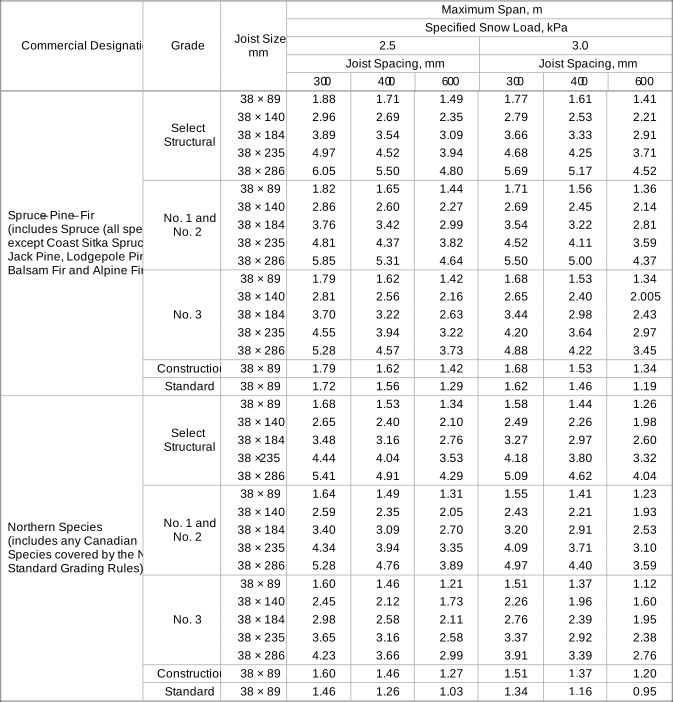
Table 9.23.4.2.-F
Maximum Spans for Roof Rafters – Specified Roof Snow Loads 1.0 to 2.0 kPa
Forming Part of Sentences 9.23.2.8.(1), 9.23.4.2.(1), 9.23.4.5.(1) and 9.23.14.10.(2)
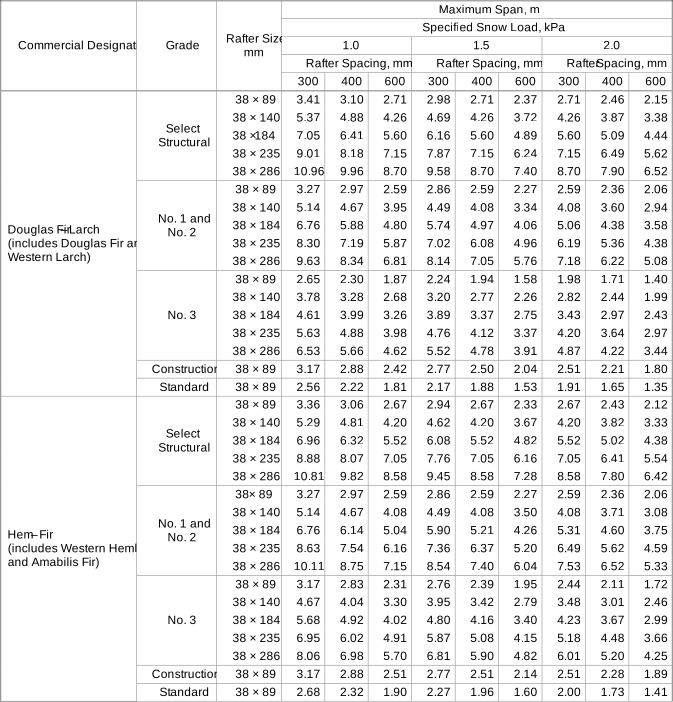
Table 9.23.4.2.-F
Maximum Spans for Roof Rafters – Specified Roof Snow Loads 1.0 to 2.0 kPa
Forming Part of Sentences 9.23.2.8.(1), 9.23.4.2.(1), 9.23.4.5.(1) and 9.23.14.10.(2)
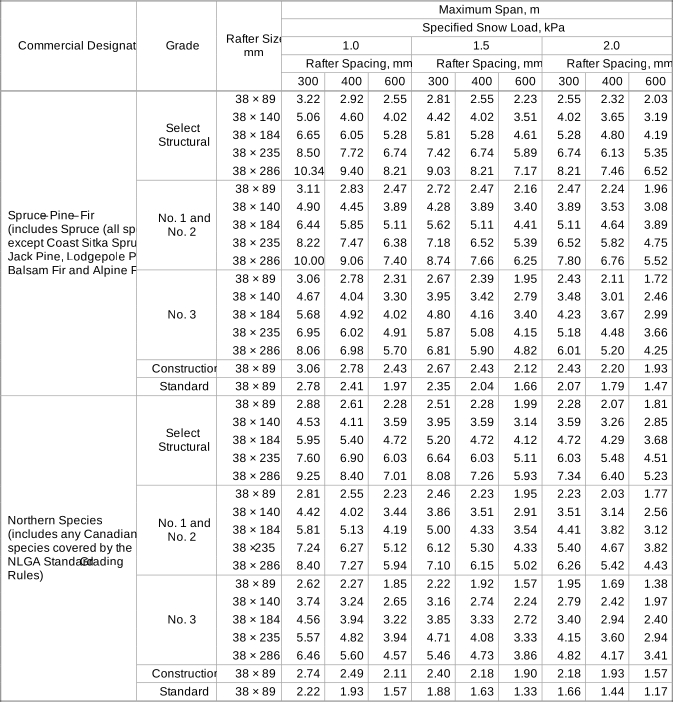
Table 9.23.4.2.-G
Maximum Spans for Roof Rafters – Specified Roof Snow Loads 2.5 and 3.0 kPa
Forming Part of Sentences 9.23.2.8.(1), 9.23.4.2.(1) and 9.23.4.5.(1)
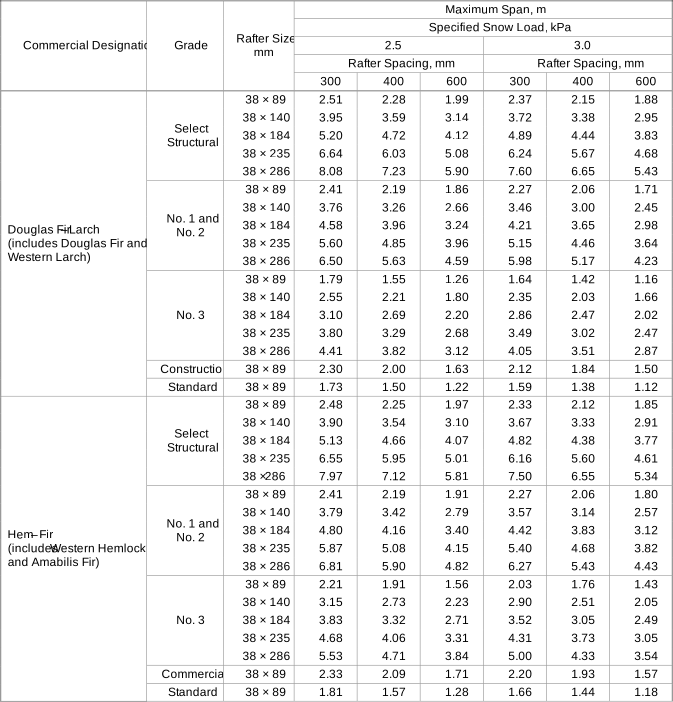
Table 9.23.4.2.-G
Maximum Spans for Roof Rafters – Specified Roof Snow Loads 2.5 and 3.0 kPa
Forming Part of Sentences 9.23.2.8.(1), 9.23.4.2.(1) and 9.23.4.5.(1)
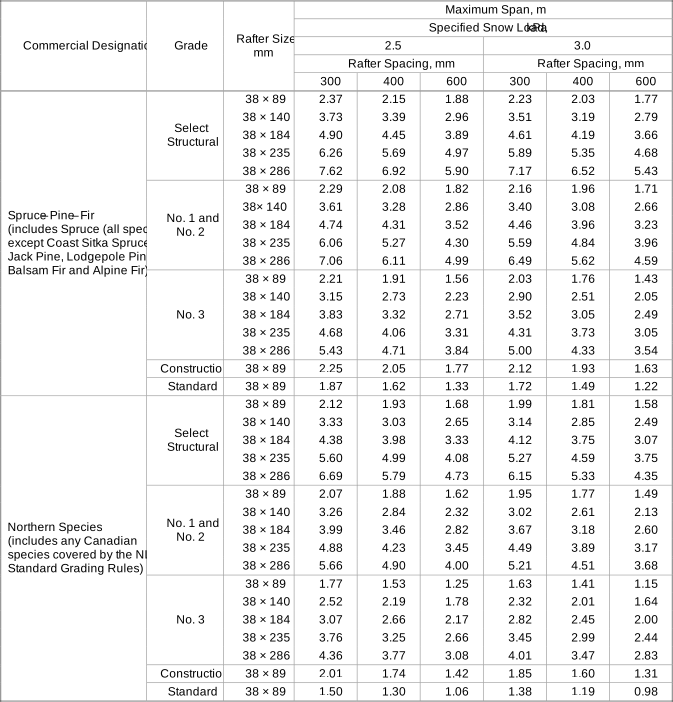
Table 9.23.4.2.-H
Maximum Spans for Built-up Floor Beams Supporting Not More than One Floor
Forming Part of Sentences 9.23.2.8.(1), 9.23.4.2.(3), 9.23.4.4.(3) and 9.23.8.1.(1)
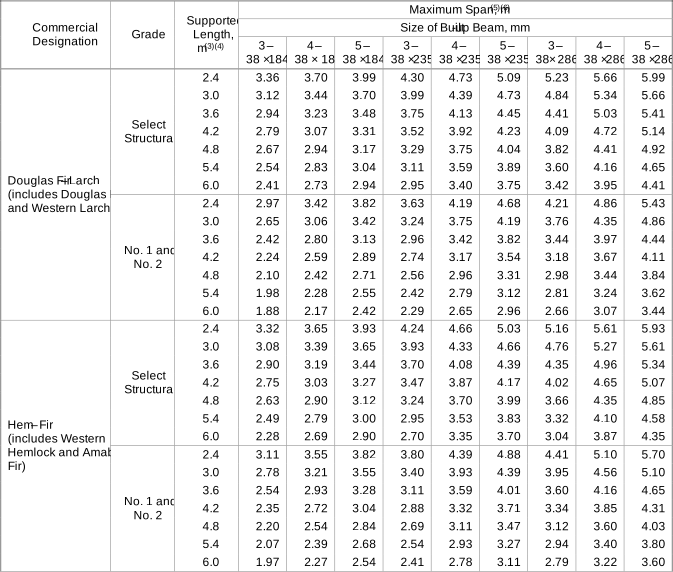
Table 9.23.4.2.-H
Maximum Spans for Built-up Floor Beams Supporting Not More than One Floor
Forming Part Sentences 9.23.2.8.(1), 9.23.4.2.(3), 9.23.4.4.(3) and 9.23.8.1.(1)
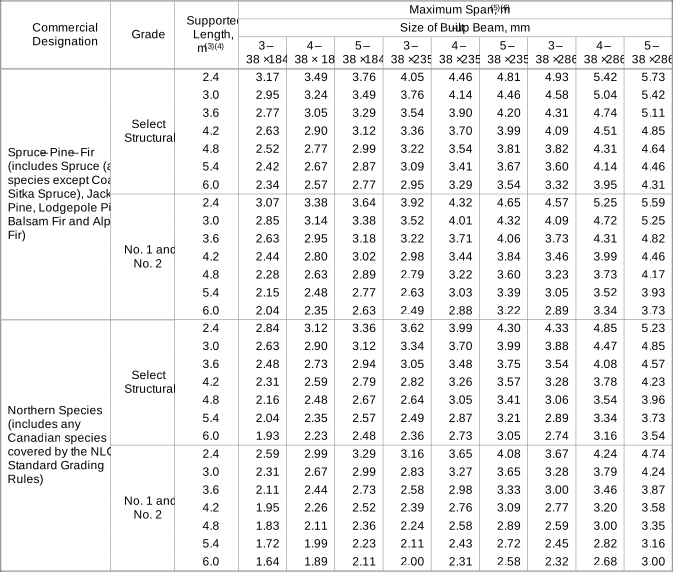
Notes to Table 9.23.4.2.-H:
(1) Beam spans apply only where the floors serve residential areas as described in Table 4.1.5.3., or the uniformly distributed live load on the floors does not exceed that specified for residential areas as described in Table 4.1.5.3.
(2) When the floors have a concrete topping of not more than 51 mm, the spans must be multiplied by 0.8.
(3) Supported length means half the sum of the joists spans on both sides of the beam.
(4) Straight interpolation may be used for other supported lengths.
(5) Spans are clear spans between supports. For total span, add two bearing lengths.
(6) 3-ply beams with supported lengths greater than 4.2 m require minimum bearing length of 114 mm. All other beams require minimum bearing length of 76 mm.
Table 9.23.4.2.-I
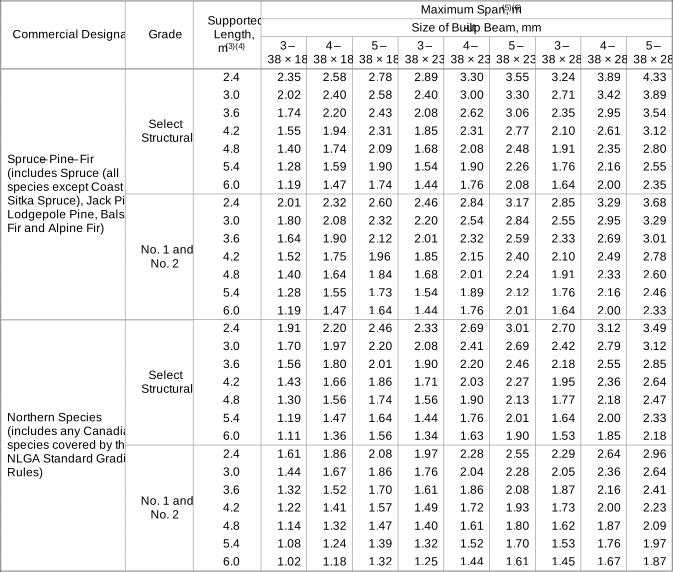
Maximum Spans for Built-up Floor Beams Supporting Not More than Two Floors
Forming Part of Sentences 9.23.2.8.(1), 9.23.4.2.(3), 9.23.4.4.(3) and 9.23.8.1.(1)
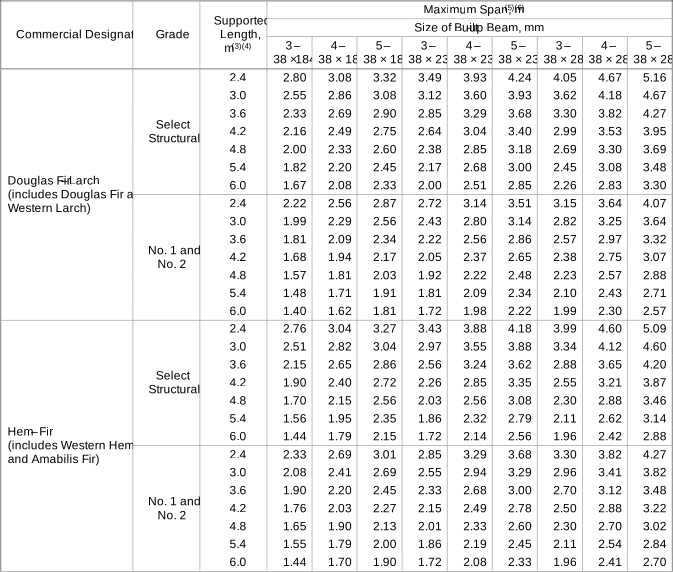
Table 9.23.4.2.-I
Maximum Spans for Built-up Floor Beams Supporting Not More than Two Floors
Forming Part of Sentences 9.23.2.8.(1), 9.23.4.2.(3), 9.23.4.4.(3) and 9.23.8.1.(1)
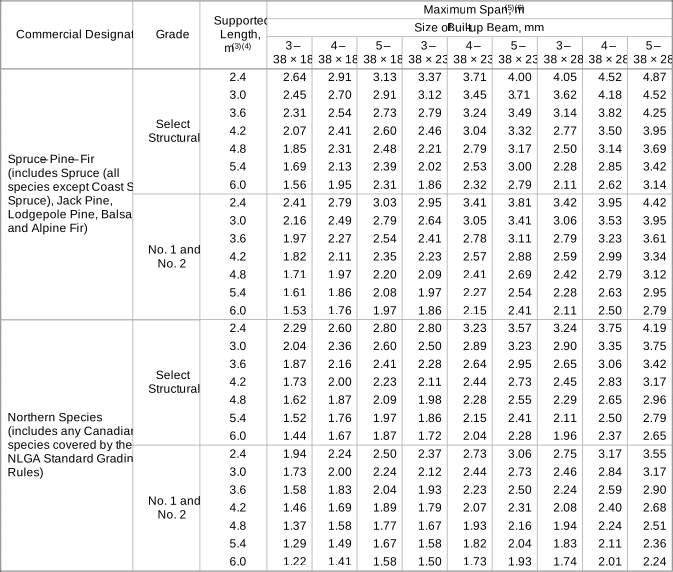
Notes to Table 9.23.4.2.-I:
(1) Beam spans apply only where the floors serve residential areas as described in Table 4.1.5.3., or the uniformly distributed live load on the floors does not exceed that specified for residential areas as described in Table 4.1.5.3.
(2) When the floors have a concrete topping of not more than 51 mm, the spans must be multiplied by 0.8.
(3) Supported length means half the sum of the joists spans on both sides of the beam.
(4) Straight interpolation may be used for other supported lengths.
(5) Spans are clear spans between supports. For total span, add two bearing lengths.
(6) 3-ply beams require minimum bearing length of 114 mm. 4-ply and 5-ply beams with supported lengths greater than 3 m require minimum bearing length of 114 mm. All other beams require minimum bearing length of 76 mm.
Table 9.23.4.2.-J
Maximum Spans for Built-up Floor Beams Supporting Not More than Three Floors
Forming Part of Sentences 9.23.2.8.(1), 9.23.4.2.(3), 9.23.4.4.(3) and 9.23.8.1.(1)
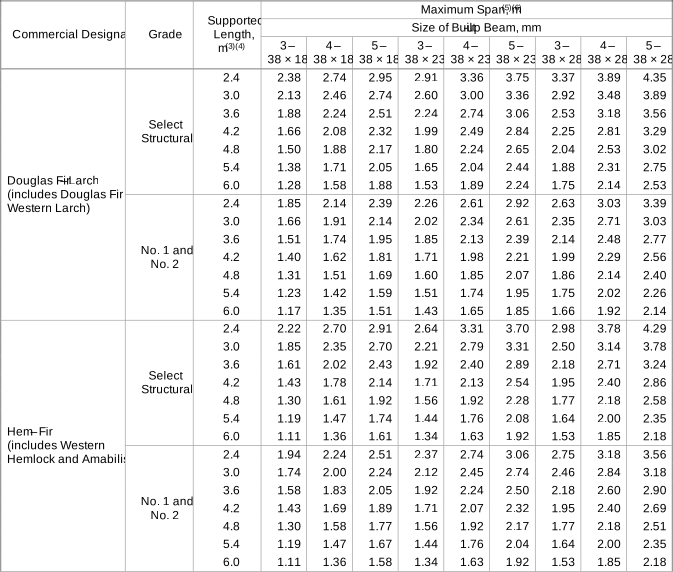
Table 9.23.4.2.-J
Maximum Spans for Built-up Floor Beams Supporting Not More than Three Floors
Forming Part of Sentences 9.23.2.8.(1), 9.23.4.2.(3), 9.23.4.4.(3) and 9.23.8.1.(1)
Notes to Table 9.23.4.2.-J:
(1) Beam spans apply only where the floors serve residential areas as described in Table 4.1.5.3., or the uniformly distributed live load on the floors does not exceed that specified for residential areas as described in Table 4.1.5.3.
(2) When the floors have a concrete topping of not more than 51 mm, the spans must be multiplied by 0.8.
(3) Supported length means half the sum of the joists spans on both sides of the beam.
(4) Straight interpolation may be used for other supported lengths.
(5) Spans are clear spans between supports. For total span, add two bearing lengths.
(6) 3-ply beams with supported lengths greater than 4.2 m require minimum bearing length of 152 mm. All other beams require minimum bearing length of 114 mm.
Table 9.23.4.2.-K
Maximum Spans for Glue-Laminated Floor Beams – 20f-E Grade
Forming Part of Sentences 9.23.2.8.(1), 9.23.4.2.(3), 9.23.4.4.(3) and 9.23.8.1.(1)
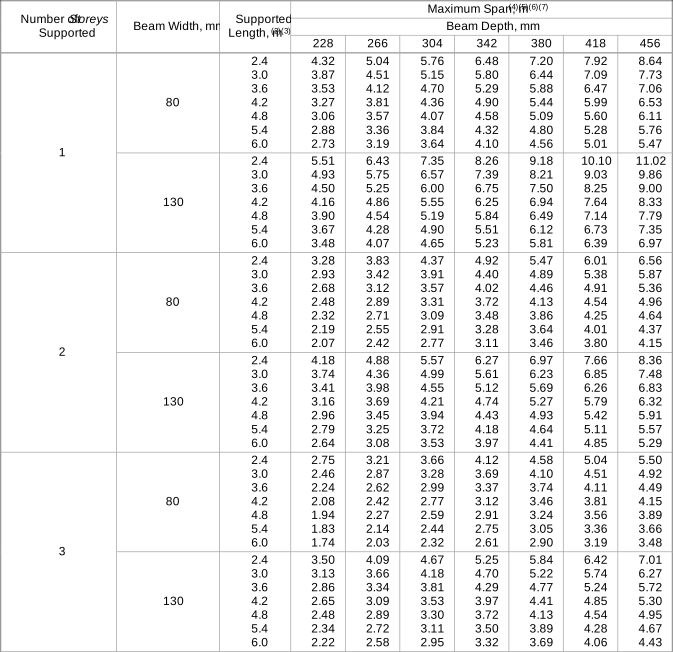
Table 9.23.4.2.-L
Maximum Spans for Built-up Ridge Beams and Lintels Supporting the Roof and Ceiling Only – No. 1 or No. 2 Grade
Forming Part of Sentences 9.23.2.8.(1), 9.23.4.2.(4), 9.23.4.5.(1), 9.23.12.3.(1) and (3) and 9.23.14.10.(2)
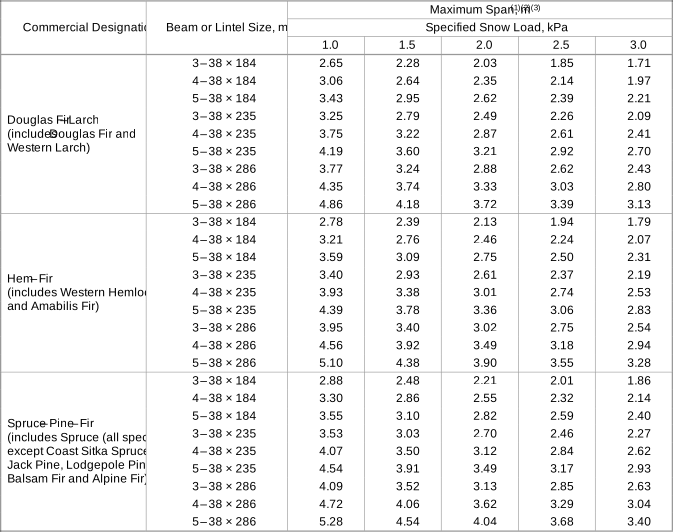
Notes to Table 9.23.4.2.-L:
(1) Beam and lintel spans are calculated based on a maximum supported length of 4.9 m. Spans may be increased by 5% for supported lengths of not more than 4.3 m, by 10% for supported lengths of not more than 3.7 m, and by 25% for supported lengths of not more than 2.4 m.
(2) For ridge beams, supported length means half the sum of the rafter, joist or truss spans on both sides of the beam. For lintels, supported length means half the sum of truss, roof joist or rafter spans supported by the lintel plus the length of the overhang beyond the lintel.
(3) Provide a minimum bearing length of 76 mm.
Table 9.23.4.3.-A
Maximum Spans for Steel Beams Supporting a Roof and One Floor in Dwelling Units Where Beams Support Exterior Stud Walls With Brick Veneer – 1.0 kPa Specified Roof Design Snow Load
Forming Part of Sentence 9.23.4.3.(1)
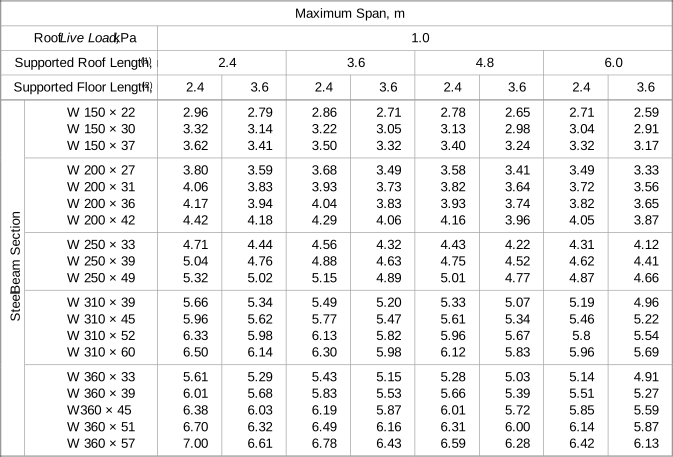
Notes to Table 9.23.4.3.-A:
(1) Supported roof length means half the sum of the roof framing spans on both sides of the beam.
(2) Supported floor length means half the sum of the floor framing spans on both sides of the beam.
Table 9.23.4.3.-B
Maximum Spans for Steel Beams Supporting a Roof and One Floor in Dwelling Units Where Beams Support Interior Stud Walls or Exterior Stud Walls With Siding – 1.0 kPa Specified Roof Design Snow Load
Forming Part of Sentence 9.23.4.3.(1)
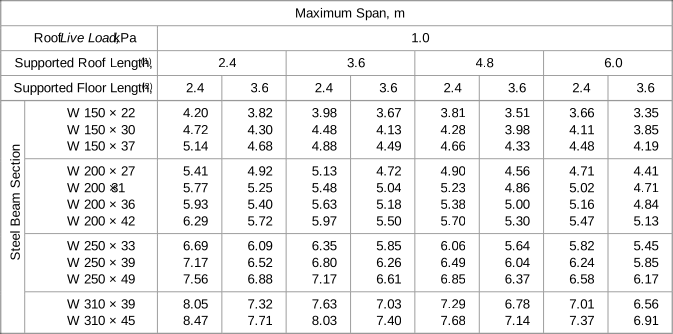
Notes to Table 9.23.4.3.-B:
(1) Supported roof length means half the sum of the roof framing spans on both sides of the beam.
(2) Supported floor length means half the sum of the floor framing spans on both sides of the beam.
Table 9.23.4.3.-C
Maximum Spans for Steel Beams Supporting a Roof and One Floor in Dwelling Units Where Beams Support Exterior Stud Walls With Brick Veneer – 1.5 kPa Specified Roof Design Snow Load
Forming Part of Sentence 9.23.4.3.(1)
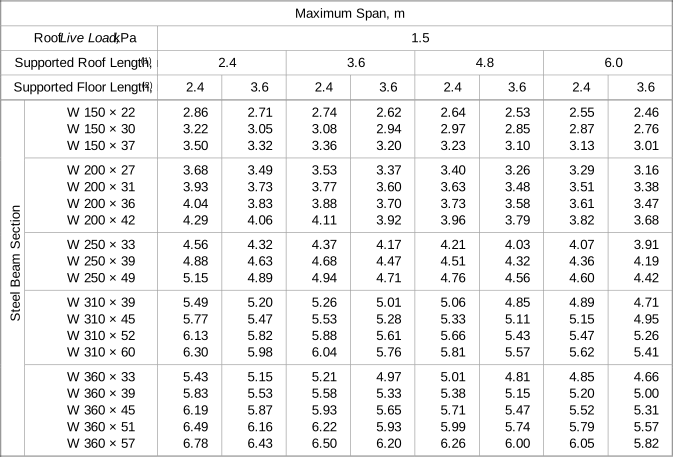
Notes to Table 9.23.4.3.-C:
(1) Supported roof length means half the sum of the roof framing spans on both sides of the beam.
(2) Supported floor length means half the sum of the floor framing spans on both sides of the beam.
Table 9.23.4.3.-D
Maximum Spans for Steel Beams Supporting a Roof and One Floor in Dwelling Units Where Beams Support Interior Stud Walls or Exterior Stud Walls With Siding – 1.5 kPa Specified Roof Design Snow Load
Forming Part of Sentence 9.23.4.3.(1)
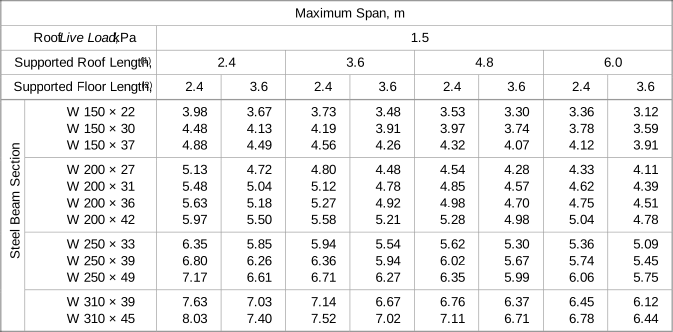
Notes to Table 9.23.4.3.-D:
(1) Supported roof length means half the sum of the roof framing spans on both sides of the beam.
(2) Supported floor length means half the sum of the floor framing spans on both sides of the beam.
Table 9.23.4.3.-E
Maximum Spans for Steel Beams Supporting a Roof and One Floor in Dwelling Units Where Beams Support Exterior Stud Walls With Brick Veneer – 2.0 kPa Specified Roof Design Snow Load
Forming Part of Sentence 9.23.4.3.(1)
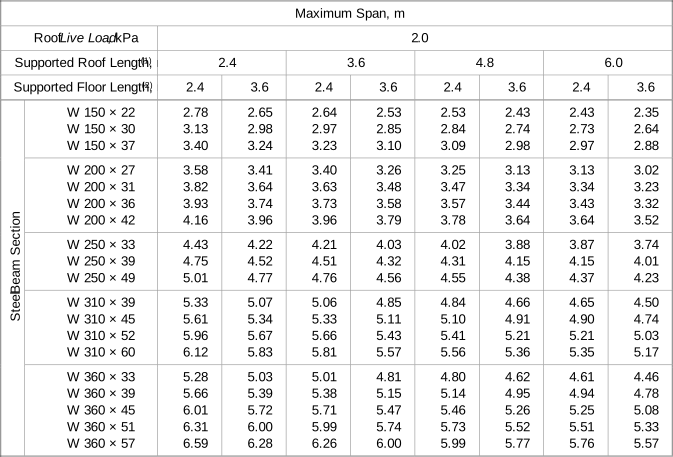
Notes to Table 9.23.4.3.-E:
(1) Supported roof length means half the sum of the roof framing spans on both sides of the beam.
(2) Supported floor length means half the sum of the floor framing spans on both sides of the beam.
Table 9.23.4.3.-F
Maximum Spans for Steel Beams Supporting a Roof and One Floor in Dwelling Units Where Beams Support Interior Stud Walls or Exterior Stud Walls With Siding – 2.0 kPa Specified Roof Design Snow Load
Forming Part of Sentence 9.23.4.3.(1)
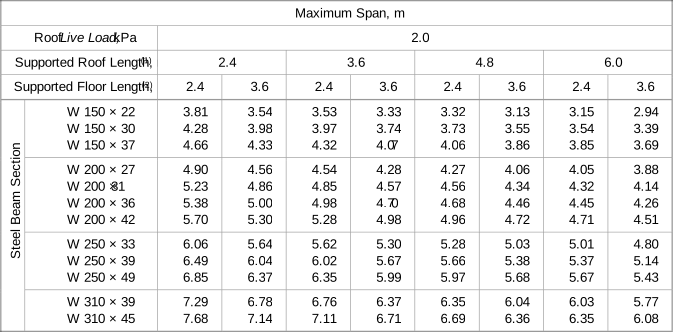
Notes to Table 9.23.4.3.-F:
(1) Supported roof length means half the sum of the roof framing spans on both sides of the beam.
(2) Supported floor length means half the sum of the floor framing spans on both sides of the beam.
Table 9.23.4.3.-G
Maximum Spans for Steel Beams Supporting a Roof and One Floor in Dwelling Units Where Beams Support Exterior Stud Walls With Brick Veneer – 2.5 kPa Specified Roof Design Snow Load
Forming Part of Sentence 9.23.4.3.(1)
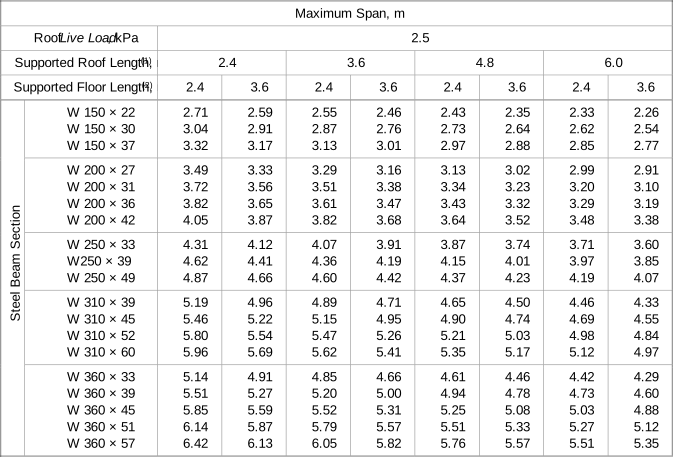
Notes to Table 9.23.4.3.-G:
(1) Supported roof length means half the sum of the roof framing spans on both sides of the beam.
(2) Supported floor length means half the sum of the floor framing spans on both sides of the beam.
Table 9.23.4.3.-H
Maximum Spans for Steel Beams Supporting a Roof and One Floor in Dwelling Units Where Beams Support Interior Stud Walls or Exterior Stud Walls With Siding – 2.5 kPa Specified Roof Design Snow Load
Forming Part of Sentence 9.23.4.3.(1)
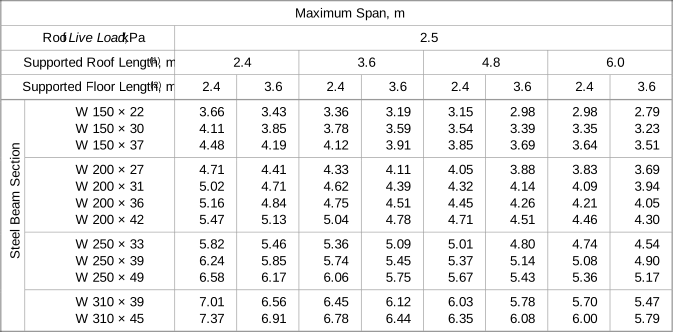
Notes to Table 9.23.4.3.-H:
(1) Supported roof length means half the sum of the roof framing spans on both sides of the beam.
(2) Supported floor length means half the sum of the floor framing spans on both sides of the beam.
Table 9.23.4.3-I
Maximum Spans for Steel Beams Supporting a Roof and One Floor in Dwelling Units Where Beams Support Exterior Stud Walls With Brick Veneer – 3.0 kPa Specified Roof Design Snow Load
Forming Part of Sentence 9.23.4.3.(1)
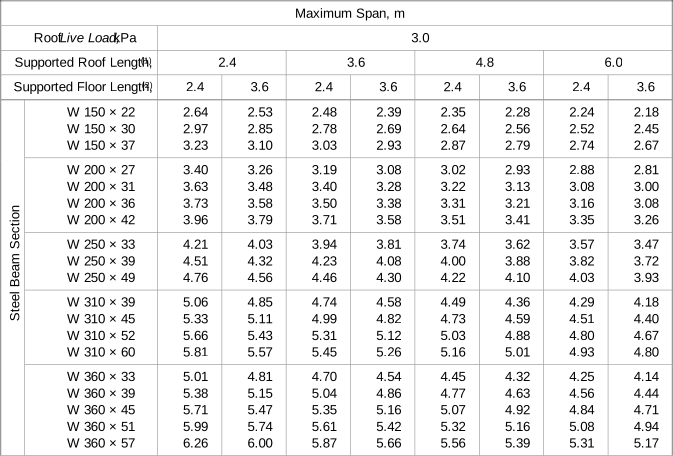
Notes to Table 9.23.4.3-I:
(1) Supported roof length means half the sum of the roof framing spans on both sides of the beam.
(2) Supported floor length means half the sum of the floor framing spans on both sides of the beam.
Table 9.23.4.3-J
Maximum Spans for Steel Beams Supporting a Roof and One Floor in Dwelling Units Where Beams Support Interior Stud Walls or Exterior Stud Walls With Siding – 3.0 kPa Specified Roof Design Snow Load
Forming Part of Sentence 9.23.4.3.(1)
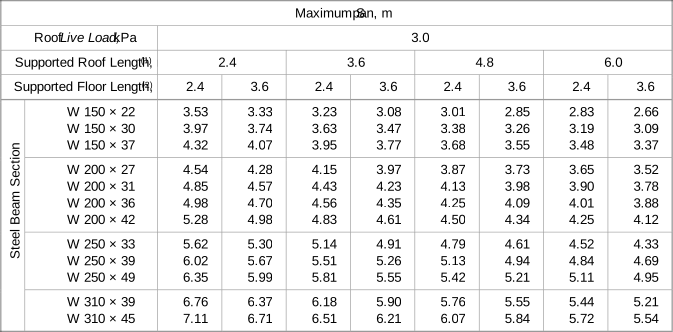
Notes to Table 9.23.4.3-J:
(1) Supported roof length means half the sum of the roof framing spans on both sides of the beam.
(2) Supported floor length means half the sum of the floor framing spans on both sides of the beam.
Table 9.23.10.1.-A
Sizes for Spruce-Pine-Fir No. 2 Grade Exterior Wall Studs With Brick Veneer
Forming Part of Sentence 9.23.10.1.(2)
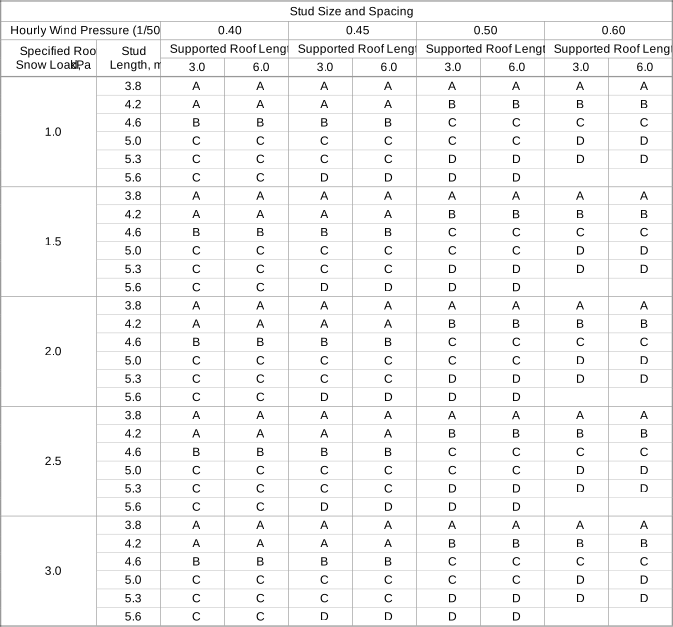
Legend - Stud Size and Spacing A = 38 × 140 mm at 400 mm on centre C = two 38 × 140 mm studs at 400 mm on centre B = 38 × 140 mm at 300 mm on centre D = two 38 × 140 mm studs at 300 mm on centre
Notes to Table 9.23.10.1.-A:
(1) A roof dead load of 0.5 kPa has been assumed. The Table does not apply where the stud supports additional loads from heavy roofing materials such as concrete tiles or clay roofing tiles.
(2) Wall construction shall conform to the requirements of Sentence 9.23.10.1.(2).
Table 9.23.10.1.-B
Sizes for Spruce-Pine-Fir No. 2 Grade Exterior Wall Studs With Siding
Forming Part of Sentence 9.23.10.1.(2)
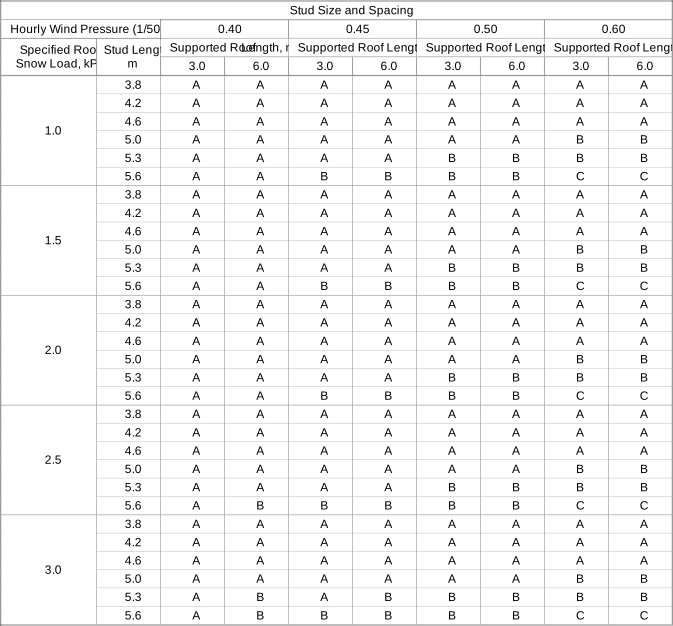
Legend - Stud Size and Spacing A = 38 × 140 mm at 400 mm on centre C = two 38 × 140 mm studs at 400 mm on centre B = 38 × 140 mm at 300 mm on centre D = two 38 × 140 mm studs at 300 mm on centre
Notes to Table 9.23.10.1.-B:
(1) A roof dead load of 0.5 kPa has been assumed. The Table does not apply where the stud supports additional loads from heavy roofing materials such as concrete tiles or clay roofing tiles.
(2) Wall construction shall conform to the requirements of Sentence 9.23.10.1.(2).
Table 9.23.10.1.-C
Sizes for Northern Species No. 2 Grade Exterior Wall Studs With Brick Veneer
Forming Part of Sentence 9.23.10.1.(2)
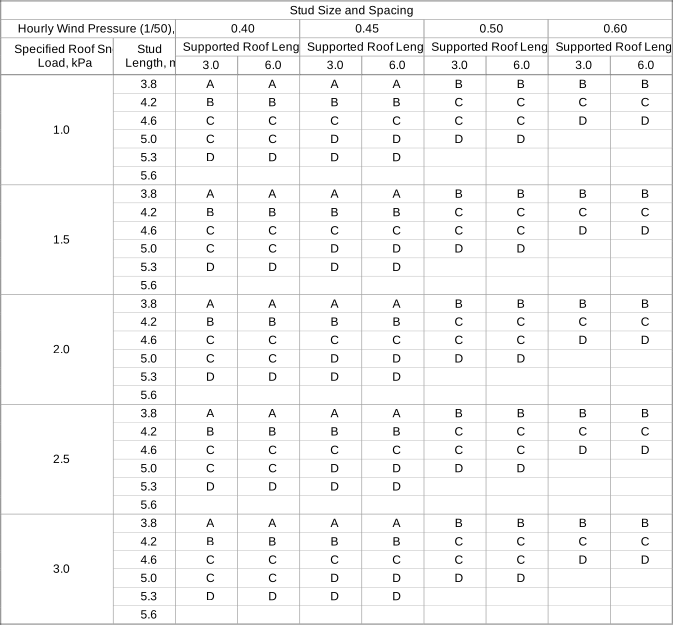
Legend - Stud Size and Spacing A = 38 × 140 mm at 400 mm on centre C = two 38 × 140 mm studs at 400 mm on centre B = 38 × 140 mm at 300 mm on centre D = two 38 × 140 mm studs at 300 mm on centre
Notes to Table 9.23.10.1.-C:
(1) A roof dead load of 0.5 kPa has been assumed. The Table does not apply where the stud supports additional loads from heavy roofing materials such as concrete tiles or clay roofing tiles.
(2) Wall construction shall conform to the requirements of Sentence 9.23.10.1.(2).
Table 9.23.10.1.-D
Sizes for Northern Species No. 2 Grade Exterior Wall Studs With Siding
Forming Part of Sentence 9.23.10.1.(2)
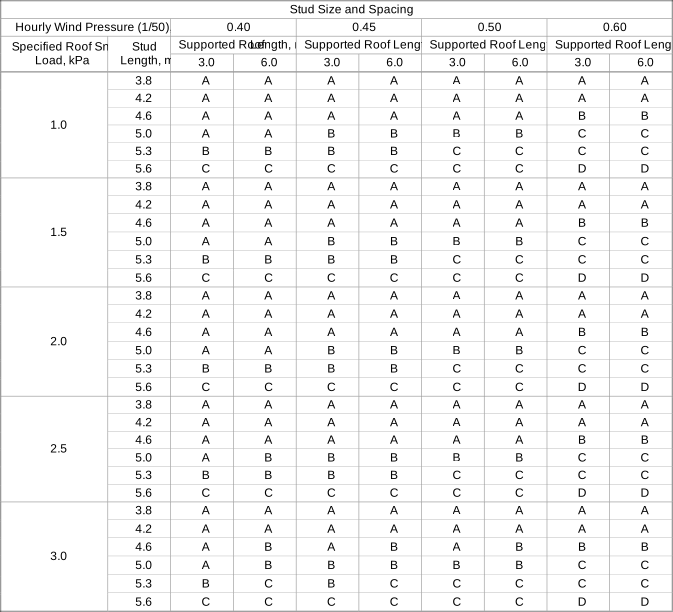
Legend - Stud Size and Spacing A = 38 × 140 mm at 400 mm on centre C = two 38 × 140 mm studs at 400 mm on centre B = 38 × 140 mm at 300 mm on centre D = two 38 × 140 mm studs at 300 mm on centre
Notes to Table 9.23.10.1.-D:
(1) A roof dead load of 0.5 kPa has been assumed. The Table does not apply where the stud supports additional loads from heavy roofing materials such as concrete tiles or clay roofing tiles.
(2) Wall construction shall conform to the requirements of Sentence 9.23.10.1.(2).
Table 9.23.10.7.-A
Minimum Number of 38 × 89 mm Spruce-Pine-Fir Stud Posts in Exterior Stud Walls Supporting Girder Trusses and Roof Beams
Forming Part of Sentence 9.23.10.7.(2)
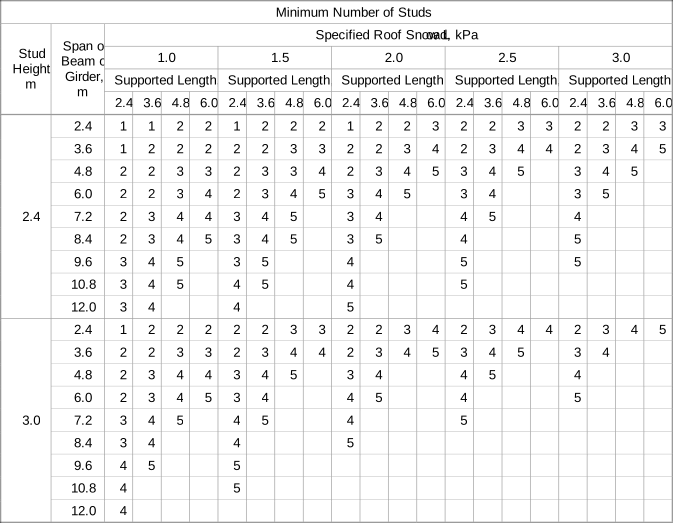
Notes to Table 9.23.10.7.-A:
(1) A roof dead load of 0.62 kPa has been assumed.
(2) Roof beams require a minimum bearing length of 89 mm.
(3) Girder trusses require a minimum bearing length of 89 mm unless otherwise specified by the truss manufacturer.
Table 9.23.10.7.-B
Minimum Number of 38 × 140 mm Spruce-Pine-Fir Stud Posts in Exterior Stud Walls Supporting Girder Trusses and Roof Beams
Forming Part of Sentence 9.23.10.7.(2)
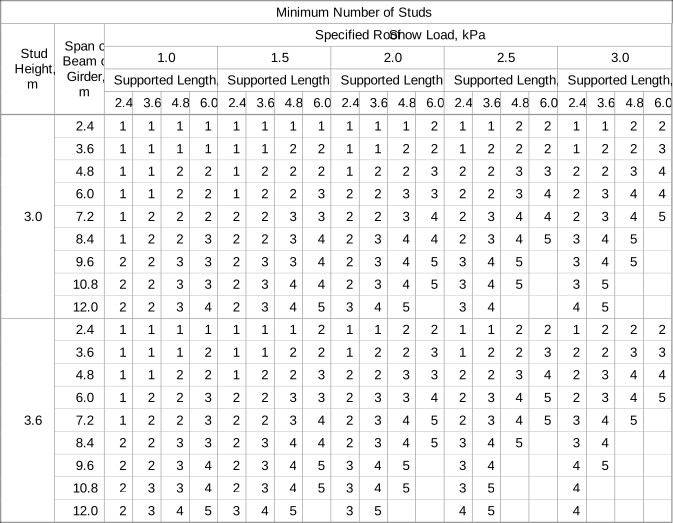
Notes to Table 9.23.10.7.-B:
(1) A roof dead load of 0.62 kPa has been assumed.
(2) Roof beams require a minimum bearing length of 140 mm.
(3) Girder trusses require a minimum bearing length of 140 mm unless otherwise specified by the truss manufacturer.
Table 9.23.10.7.-C
Minimum Number of 38 × 89 mm Northern Species Stud Posts in Exterior Stud Walls Supporting Girder Trusses and Roof Beams
Forming Part of Sentence 9.23.10.7.(2)
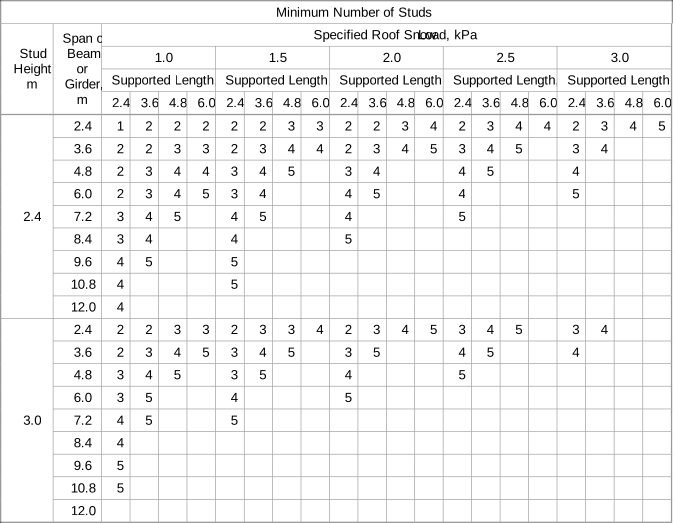
Notes to Table 9.23.10.7.-C:
(1) A roof dead load of 0.62 kPa has been assumed.
(2) Roof beams require a minimum bearing length of 89 mm.
(3) Girder trusses require a minimum bearing length of 89 mm unless otherwise specified by the truss manufacturer.
Table 9.23.10.7.-D
Minimum Number of 38 × 140 mm Northern Species Stud Posts in Exterior Stud Walls Supporting Girder Trusses and Roof Beams
Forming Part of Sentence 9.23.10.7.(2)
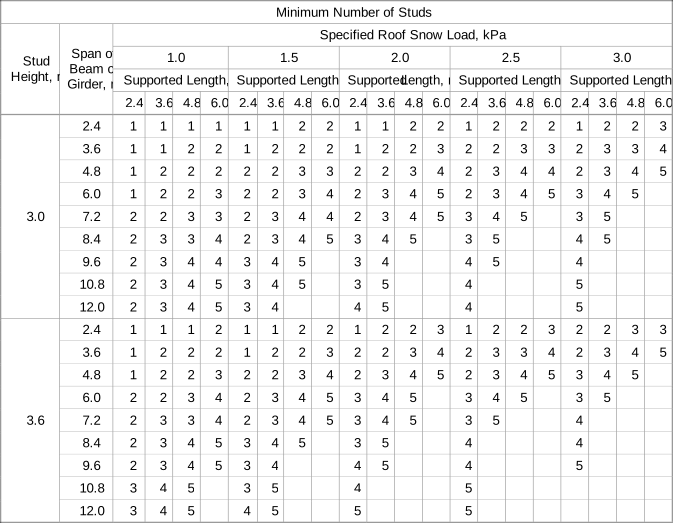
Notes to Table 9.23.10.7.-D:
(1) A roof dead load of 0.62 kPa has been assumed.
(2) Roof beams require a minimum bearing length of 140 mm.
(3) Girder trusses require a minimum bearing length of 140 mm unless otherwise specified by the truss manufacturer.
Table 9.23.12.3.-A
Maximum Spans for Douglas Fir – Larch Lintels – No. 1 or No. 2 Grade – Non-Structural Sheathing
Forming Part of Sentences 9.23.2.8.(1), 9.23.4.5.(1), 9.23.12.3.(1) and (3)
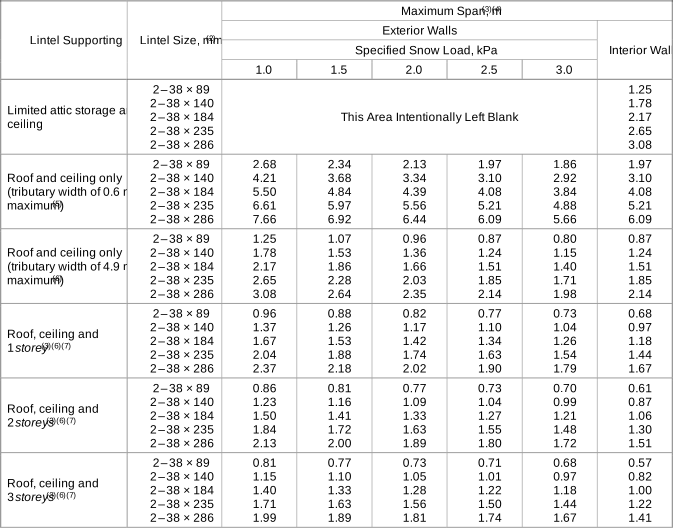
Notes to Table 9.23.12.3.-A:
Table 9.23.12.3.-B
Maximum Spans for Hem – Fir Lintels – No. 1 or No. 2 Grade – Non-Structural Sheathing
Forming Part of Sentences 9.23.2.8.(1), 9.23.4.5.(1), 9.23.12.3.(1) and (3)
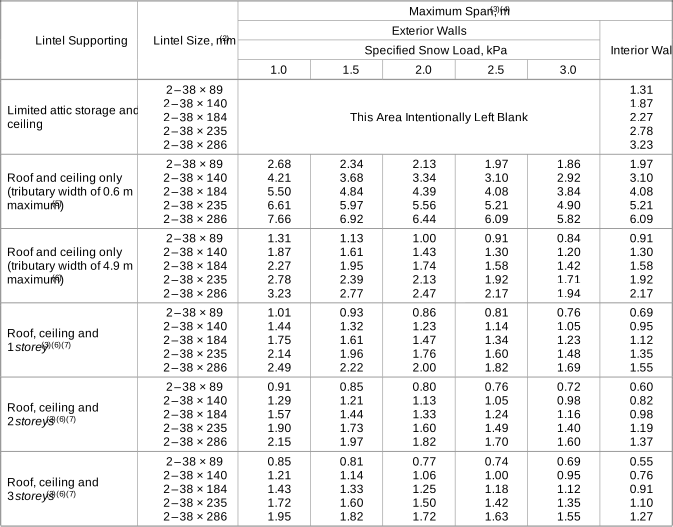
Notes to Table 9.23.12.3.-B:
Table 9.23.12.3.-C
Maximum Spans for Spruce – Pine – Fir Lintels – No. 1 or No. 2 Grade – Non-Structural Sheathing
Forming Part of Sentences 9.23.2.8.(1), 9.23.4.5.(1), 9.23.12.3.(1) and (3)
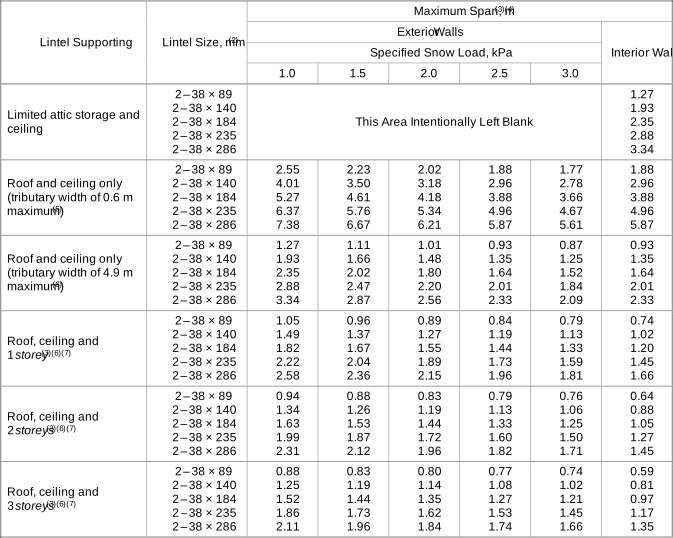
Notes to Table 9.23.12.3.-C:
Table 9.23.12.3.-D
Maximum Spans for Glued-Laminated Timber Lintels – 20f-E Stress Grade – Exterior Walls – Roof and Ceiling Load Only
Forming Part of Sentences 9.23.2.8.(1), 9.23.4.5.(1), 9.23.12.3.(1) and (3)
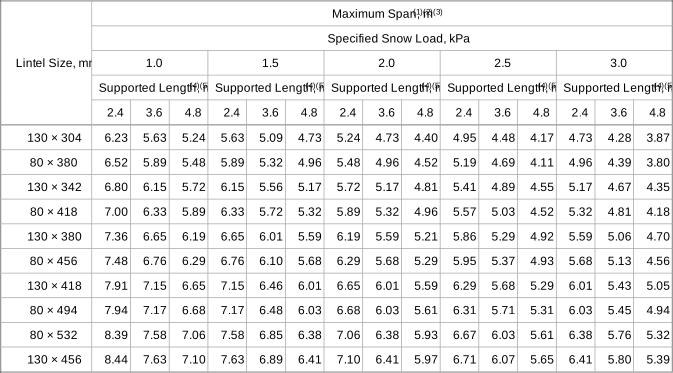
Notes to Table 9.23.12.3.-D:
(1) Spans are valid for glued-laminated timber conforming to CAN/CSA-O122 and CSA O177.
(2) Provide a minimum bearing length of 89 mm. (Alternatively, the bearing length may be calculated in accordance with Part 4.)
(3) Top edge of lintel assumed to be fully laterally supported.
(4) Supported length means half the length of trusses or rafters, plus the length of overhang beyond the wall.
(5) For intermediate supported lengths, straight interpolation may be used.